
Skip to content

Home Pottery Kilns

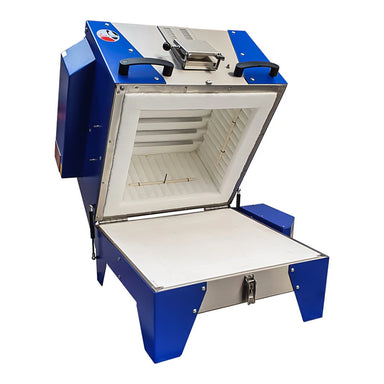
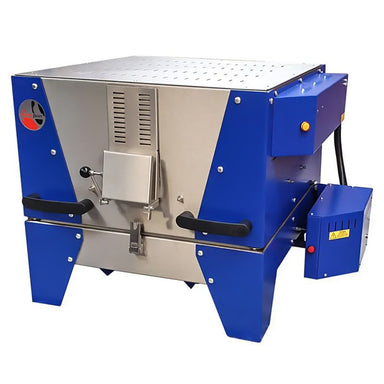
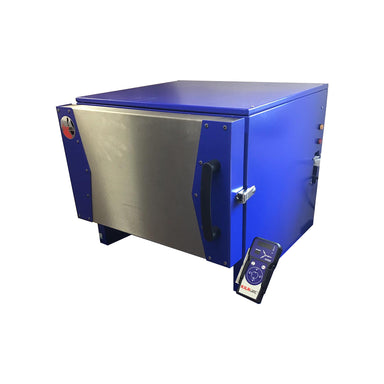
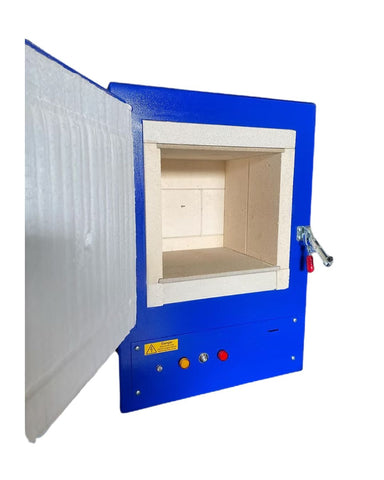
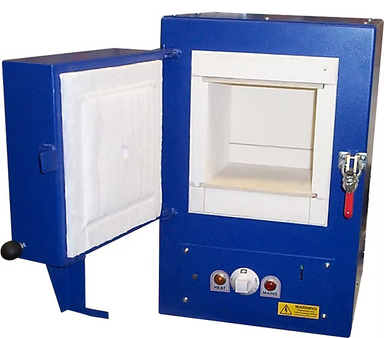
Electric pottery kilns for home use — plug-in 13A models that need no installation, plus hardwired kilns with more capacity when you're ready to scale up. Every kiln here is a genuine home-suitable model that fits around real homes: garages, spare rooms, utility rooms, outbuildings.

What kiln do I need for pottery at home?

Most home potters need a 13A plug-in electric kiln of 30–50 litres — it plugs into a standard UK wall socket, needs no electrician, fires to stoneware temperatures (1260–1300°C), and costs roughly £900–£1,500. Choose a hardwired 16A/32A kiln only if you want 60 litres or more capacity.

Which home kiln is right for you?

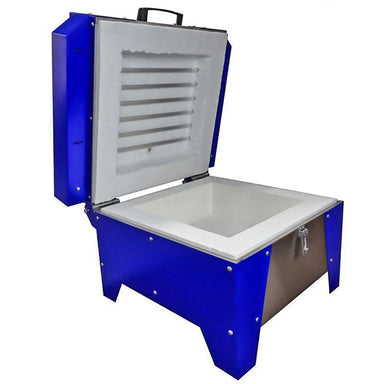
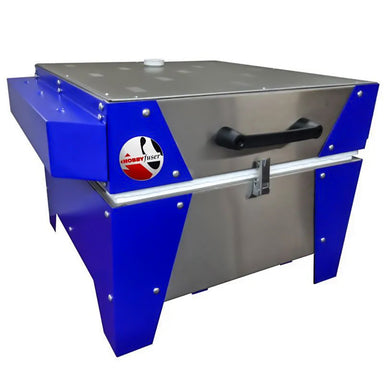
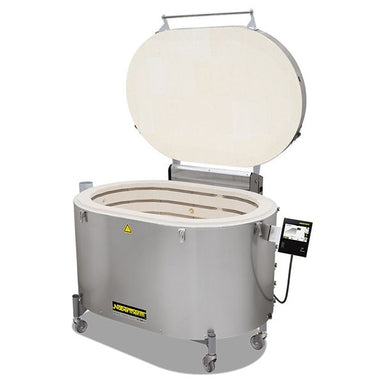
  • 13A plug-in kilns — plug straight into a standard UK wall socket. No electrician, no electrical work. Typically 30–50L capacity; great first kilns. Hobbyfuser, CU2, Ecokiln+ 30L, Nabertherm Top 60L.
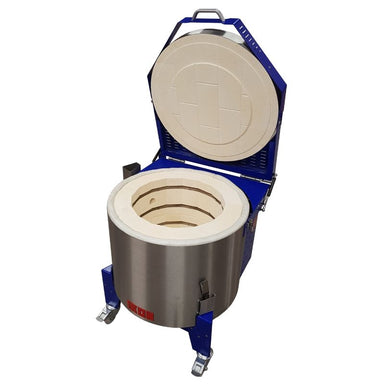
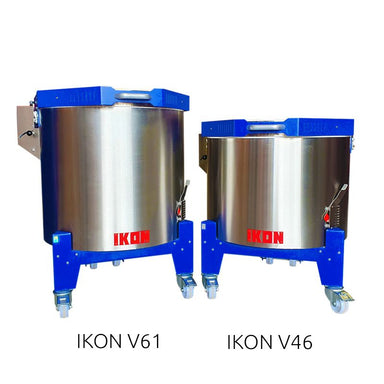
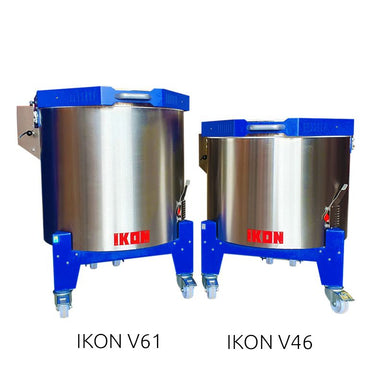
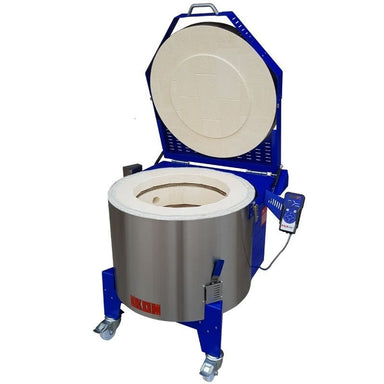
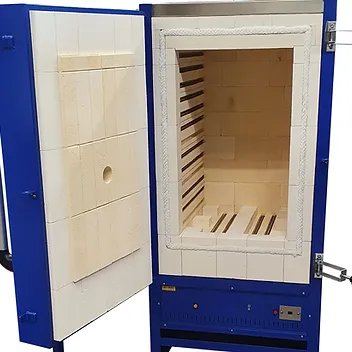
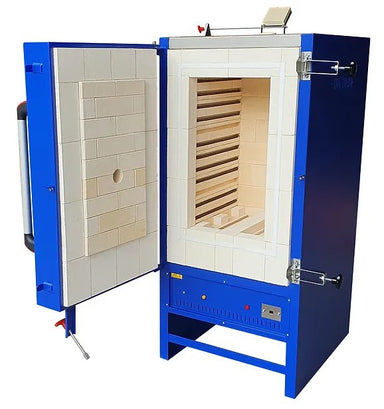
  • Hardwired kilns — need a 16A or 32A circuit fitted by an electrician. More capacity (50–200L), faster firing, more power headroom. Falcon front-loaders, Ikon top-loaders, Artizan 90/139/200L.
  • Firing range — all kilns here reach stoneware temperatures (1260–1300°C). Bisque, earthenware, stoneware, porcelain and raku are all within reach.
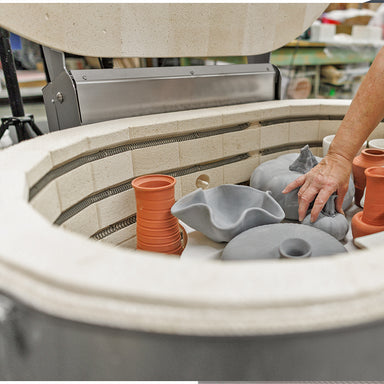
  • Capacity guide — 30L fits roughly 15 mugs or 6 bowls; 60L fits a small batch for a weekend session; 100L+ is studio-scale.

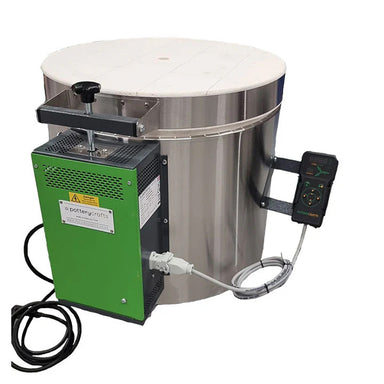
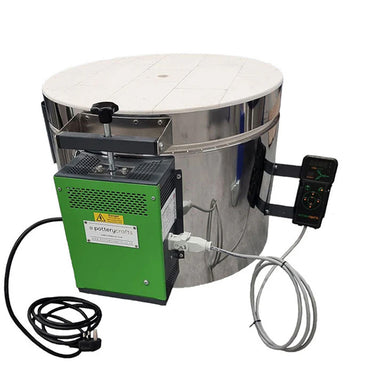
Brands we stock for home use: Kilns & Furnaces (UK-made, our bestsellers), Kilncare (UK-made, premium), Nabertherm (German engineering), Potterycrafts (UK), plus the Rohde hobby range. Every kiln comes with a digital controller.

Delivery and support: free UK mainland delivery on most kilns. We're potters ourselves — call 01202 144142 or email us before you order and we'll help you pick the right model for your space and power supply. New to kilns? Read our firing guides or explore the small pottery kilns collection for the most compact options.

What's the best pottery kiln for a beginner?

For most beginners in the UK, the best pottery kiln is a 13A plug-in electric model of around 30–40 litres — it works from a standard wall socket, needs no electrician, and fires every common clay to stoneware temperature. Expect to pay roughly £900–£1,500 new, with a digital controller handling the firing schedule for you.

If you're weighing up a pottery kiln for beginners UK-wide, the models to compare are the 13A class we stock on this page — the Hobbyfuser, the CU2 and the Ecokiln+ 30L all plug straight in and are sized for a hobby potter's weekend output. Buy for the work you want to make in a year's time, not just your first month: a 30–40L kiln leaves room to grow without needing electrical work, while the very smallest kilns can feel tight once you move past test pieces. If you're unsure, ring us — we fire these kilns ourselves and we'll tell you honestly which one fits your room and your plans.

Pottery kiln FAQs

Can I plug a pottery kiln into a normal socket?
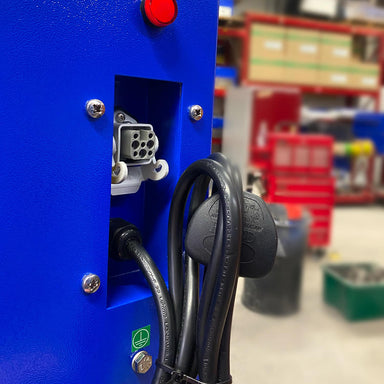
Yes — any 13A kiln on this page plugs into a standard UK wall socket with no electrical work. Typical capacity for 13A kilns is 30–50 litres, which is plenty for most home potters. Larger kilns (60L+) usually need a 16A or 32A hardwired circuit fitted by an electrician.

What size pottery kiln do I need?
For hobby or beginner use, a 30–50L kiln fires around 15 mugs or 6 medium bowls per load — a comfortable weekend's throwing. Studios producing for sale or teaching usually want 60–100L. Over 100L is studio-scale; see our large studio-scale kilns.

How much does a home pottery kiln cost?
Entry-level 13A plug-in kilns start around £900–£1,500. Mid-range 50–80L kilns with a digital controller run £1,800–£3,500. We've written a full UK pottery kiln cost breakdown covering purchase, running costs and electrician fees.

How long does a pottery kiln take to fire?
A typical bisque firing is 8–10 hours; a glaze firing to stoneware (1260°C) is 10–12 hours. Most kilns include programmable controllers so you can set the schedule and leave it. Add cool-down time before opening — usually overnight.

Which brands do you stock?
UK-made Kilns & Furnaces (our bestsellers) and Kilncare, German-engineered Nabertherm, plus Potterycrafts and the Rohde hobby range. Every kiln ships with a digital controller and our support before and after the sale.

Do you really need a kiln for pottery?
If you want durable, waterproof, glazed ceramics — yes. Pottery clay only becomes true ceramic when fired above roughly 1,000°C, far hotter than any home oven can reach. Air-dry clays skip the kiln but stay porous and fragile, so they're best for decorative pieces only. We've covered the alternatives honestly in our guide to drying clay at home without a kiln — but for functional, food-safe pottery, a kiln is the one piece of kit you can't work around.

Is a second hand pottery kiln worth buying?
Sometimes — but be careful. Elements and controllers wear with every firing, and a second hand pottery kiln rarely comes with a warranty or a known firing count. If you view one, check the brick lining for cracks, ask how many firings the elements have done, and confirm spare parts are still available for the model. A new kiln costs more upfront but arrives with a warranty, UK support and parts availability — which is why most beginners start new.

Why potters buy their kiln from us

We're potters ourselves — Matt and Shannon run the showroom, take the calls and answer the emails. We stock only kilns we'd recommend to a friend: no grey-market imports, no commodity repaint jobs. Every kiln on this page has been vetted by us for UK power supplies, UK parts availability, and UK-based service.

Free UK mainland delivery on most kilns, next-working-day shipping where possible, and a genuine returns policy. If you're not sure which kiln is right for your room, your clay, or your power supply — ring us on 01202 144142. We'd rather spend 20 minutes on the phone than sell you the wrong kiln.

Before you decide on a size, it's worth knowing what each one costs to fire. Our kiln running cost calculator shows you the electricity cost per firing, per month and per year for every kiln in this range — with the maths shown, so you can check it against your own bill.