
Skip to content

Filters

Drying and Damp Cabinets

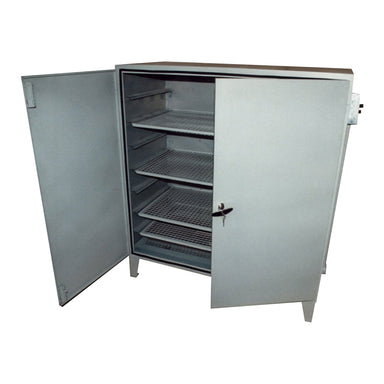
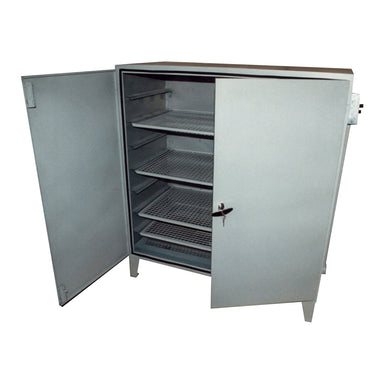
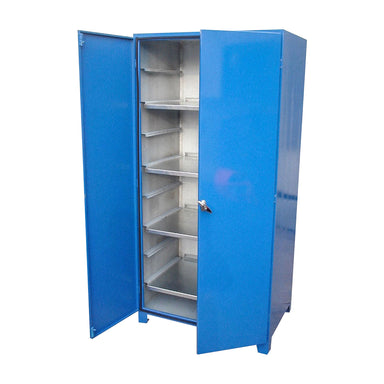
A damp cabinet or drying cabinet is one of the most useful pieces of equipment in a busy pottery studio. Both control how quickly clay loses moisture — a damp cabinet holds work at the right stage so you can carry on across several sessions, while a drying cabinet speeds up and evens out drying so finished pieces reach the kiln safely. Kiln Crafts stocks the Gladstone range of studio damp and drying cabinets for home potters, teaching studios and production workshops.

What is a damp cabinet?

A damp cabinet (sometimes called a damp cupboard or clay cabinet) is an enclosed, humidity-retaining unit that keeps greenware moist. Clay only stays workable while it holds water, so leaving a half-thrown or half-decorated piece in the open air for a day or two usually means it has dried past the point where you can trim, join or carve it. A damp cabinet slows that moisture loss right down, letting you hold pots at leather-hard — or bring them back towards it — for as long as you need.

This matters most when you work in stages. Handles and spouts need the body and the addition to be at a similar moisture level before you join them, and large or sculptural work is often built up over several sittings. A studio damp cupboard is what makes that multi-session way of working practical.

Why use a drying cabinet?

A drying cabinet does the opposite job: it moves air around your work so it dries steadily and evenly rather than cracking. Uneven drying — where rims and handles dry far faster than thick bases — is one of the most common causes of cracks and warping before a piece even reaches the kiln. A drying cabinet gives you a controlled, enclosed space to dry pots reliably, which is especially valuable in a damp UK studio, in winter, or when you need work bone-dry for a bisque firing on a fixed timetable.

Teaching studios and production potters get the most from a drying cabinet because it removes the guesswork: work goes in wet and comes out ready to fire, on schedule, without a tray of pots drying at different rates on every shelf.

Damp cabinet vs drying cabinet — which do you need?

The two are easy to confuse, so it helps to be clear about the job you want done:

  • Choose a damp cabinet if your problem is work drying out too fast — you want to pause, keep clay leather-hard, and finish pieces over several sessions.
  • Choose a drying cabinet if your problem is work drying unevenly or too slowly — you want controlled, crack-free drying to get pieces kiln-ready.

Many working studios end up wanting both functions, which is why a high-capacity cabinet that can hold a lot of work in one controlled environment is often the better long-term buy than a small unit.

Choosing a damp or drying cabinet

A few practical points to weigh up before you order studio ceramic drying equipment:

  • Capacity and height — think about how much work you produce in a week and how tall your pieces are. A 180 cm high cabinet holds far more than a 120 cm unit and suits taller vases and sculptural work; a double cabinet doubles the shelving where two potters share a space.
  • Footprint — measure the studio space before choosing, and leave room for the doors to open fully.
  • How you work — occasional makers who just need to pause a piece can start with a single damp cabinet; studios firing on a schedule benefit from a dedicated drying cabinet.
  • Shelving — adjustable shelving lets you fit both tall and short work and get the most out of the cabinet as your making changes.

Gladstone damp and drying cabinets we stock

All of our studio cabinets are made by Gladstone Engineering in Stoke-on-Trent and come with UK delivery and support from real potters. Call 01202 144142 if you would like help choosing the right size for your studio.

Damp and drying cabinet FAQs

What is the difference between a damp cabinet and a drying cabinet?
A damp cabinet keeps clay moist so you can hold work at leather-hard and finish it over several sessions; a drying cabinet moves air to dry finished work evenly and get it ready for the kiln.

Do I need a damp cabinet as a beginner?
Not straight away — a plastic sheet works for a single piece — but as soon as you start working across multiple sessions or making larger pots, a damp cabinet quickly pays for itself in fewer ruined pieces.

Can a drying cabinet prevent cracking?
Uneven drying is a leading cause of cracks. A drying cabinet dries work in a controlled, enclosed space so rims, handles and bases dry at a more even rate, which greatly reduces the risk.

What size drying cabinet should I buy?
Match it to your output and the height of your work. A 120 cm cabinet suits smaller studios, a 180 cm cabinet holds taller pieces, and a double cabinet suits shared or production spaces.