
Skip to content

Filters

Work Tables

A dedicated pottery table is one of the most useful upgrades a working potter can make. Clay, water, slip and glaze are hard on ordinary furniture, so studio pottery tables and work benches are built to take daily wear — sturdy frames, wipe-clean surfaces and the right working height for wedging, throwing prep, decorating and tile work. This collection brings together the wedging tables, work benches and tile tables Kiln Crafts stocks for home studios, classrooms and professional ceramics workshops.

Choosing a ceramics work table

Whether you call it a ceramics table, a clay table or a piece of ceramic studio furniture, the same few things matter. Get these right and a table will serve you for years of regular use.

  • Surface — a good studio surface resists clay, moisture and glaze, and wipes down quickly at the end of a session. Absorbent tops such as timber or plaster suit wedging, while sealed surfaces suit decorating and glazing.
  • Working height — wedging is physical work, so a slightly lower, solid bench lets you put your body weight over the clay. A standard ceramic studio table height suits throwing prep, banding and finishing while standing.
  • Stability — a table that rocks makes wedging and centring harder than it needs to be. Look for a braced frame that stays planted when you lean into it.
  • Storage — integrated shelving or drawers keep tools, bats and boards to hand and save you buying separate furniture.
  • Footprint — measure your available space before ordering, and leave room to walk around the table if it will sit in the middle of a studio.

Wedging tables

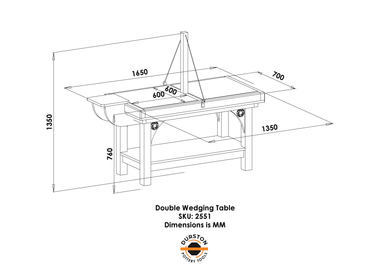
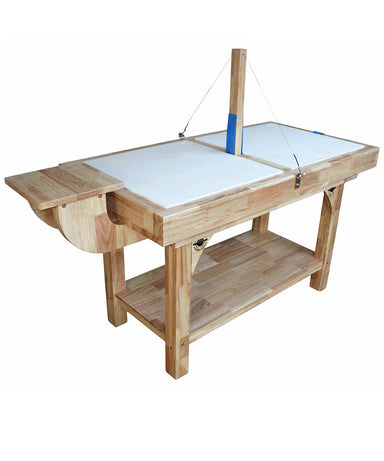
A wedging table gives you a firm, slightly absorbent surface to knead and de-air clay before throwing or hand-building. A purpose-built bench makes the job faster and far easier on your back than a kitchen worktop. We stock the Durston Wedging Table for home and small-studio use, and the larger Durston Double Wedging Table where two potters share a space or you prepare clay in volume.

Studio work benches

A general pottery work bench earns its place as the everyday surface in any studio — somewhere to set out boards, trim, decorate, glaze and store work in progress. The Gladstone G140 Work Bench is a robust studio bench built for continuous ceramics use, the kind of potters workbench that takes daily clay work without complaint.

Tile cutting and extruding tables

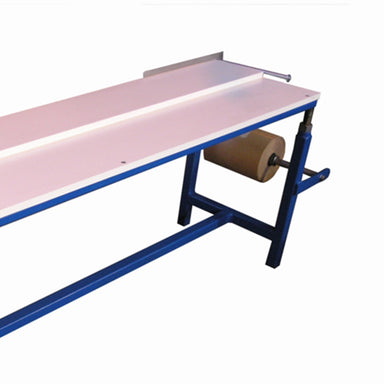
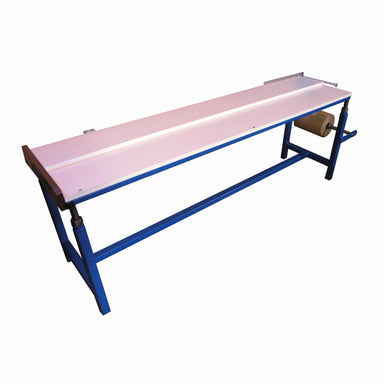
If you work flat, a specialist tile table keeps your slabs square and consistent. The Gladstone G71 Tile Cutting Table is designed for accurate, repeatable tile cutting, while the Gladstone G72 Tile Extruding Table pairs a worktable with extruding for forming tiles and trim. Both suit tile-makers and anyone producing slab work at scale.

Setting up your studio

Most studios end up with at least two surfaces — a solid wedging bench near the clay store, and a larger studio table for decorating, glazing and drying ware. Pair your table with the right tools and equipment: browse our pottery wheels for throwing and our home pottery kilns for firing once your pieces are ready. A well-planned bench layout keeps clay, water and glaze where you need them and makes every session more productive.

Frequently asked questions

What is a pottery table?
A pottery table is a work surface built for ceramics — strong enough to take wedging, throwing prep, decorating and glazing, with a top that resists clay and moisture and wipes clean. It is the central working surface in most home and studio set-ups.

What should I look for in a ceramics work table?
Prioritise a stable, braced frame, a hard-wearing surface suited to your main task (absorbent for wedging, sealed for glazing), a comfortable working height, and integrated storage if space is tight. Measure your studio before ordering.

What is a wedging table and do I need one?
A wedging table is a firm, often slightly absorbent bench for kneading and de-airing clay before you throw or hand-build. If you prepare clay regularly, a dedicated wedging table makes the job quicker and much easier on your back than working on a standard worktop.

Can I use a pottery table for tile work?
A general studio bench works for occasional flat work, but if you make tiles regularly a dedicated tile cutting or tile extruding table keeps your slabs square and consistent and speeds up production.

How much space do I need for a studio work bench?
Allow for the table footprint plus room to stand and move around it — ideally clear access on the working side, and space to set down boards and tools nearby. Always check the dimensions against your studio before buying.