

Always Here for Advice

The pottery wheel is one of the most important tools in the history of ceramics. For thousands of years it has helped potters shape clay into symmetrical bowls, jars, and vessels used in daily life. From simple hand-turned discs to powerful modern electric wheels, the pottery wheel has continually evolved while remaining central to the craft of pottery.
The pottery wheel was first developed in the Near East around 3500 BC. Early versions, known as slow wheels or tournettes, were simple rotating platforms turned by hand. By around 3000 BC, potters introduced the fast wheel with a flywheel mechanism, allowing clay to be shaped quickly using a technique called throwing. This invention dramatically increased pottery production and spread across ancient civilisations including Mesopotamia, Egypt, Greece, and China.
Long before the pottery wheel existed, people were already shaping clay into useful vessels. The earliest known pottery dates back around 20,000 years, with examples discovered in ancient China.
Early potters used several hand-building techniques, including:
These methods worked well but required patience and skill. Pots had to be built slowly, layer by layer, which limited production speed and made perfectly symmetrical forms difficult to achieve.
Despite these limitations, hand-built pottery laid the foundations for the development of the wheel and remains an important ceramic technique today.


The earliest pottery wheels appeared in the Near East around 3500 BC. These early devices were simple rotating platforms known as tournettes or slow wheels.
Instead of throwing clay, potters used these wheels to rotate their work gradually while continuing to build pots using coiling techniques. Even this simple improvement helped make pottery production faster and more consistent.
A major advancement came around 3000 BC with the introduction of the fast wheel. By adding a heavy flywheel beneath the wheel head, potters could spin the wheel much faster and keep it rotating longer.
This innovation allowed potters to place a lump of clay directly on the wheel and shape it while spinning — a technique now known as wheel throwing. Throwing made it possible to produce symmetrical vessels far more efficiently than before.
Once developed, the pottery wheel spread rapidly across ancient cultures. Each civilisation adapted the technology to suit its own artistic styles and practical needs.
In ancient Mesopotamia, the wheel enabled potters to produce standardised vessels used for storage, trade, and transport. Archaeologists have discovered early wheels in the city of Ur dating to around 3129 BC.
Egyptian potters used wheels to create elegant jars and containers for oils, perfumes, and food storage. Pottery became an important part of daily life and burial practices.
In classical Greece and Rome, the wheel supported the mass production of amphorae and other vessels used to transport wine, olive oil, and grains across vast trade networks.
Chinese potters adopted the wheel to produce fine ceramics and porcelain, helping establish one of the world’s most influential pottery traditions.


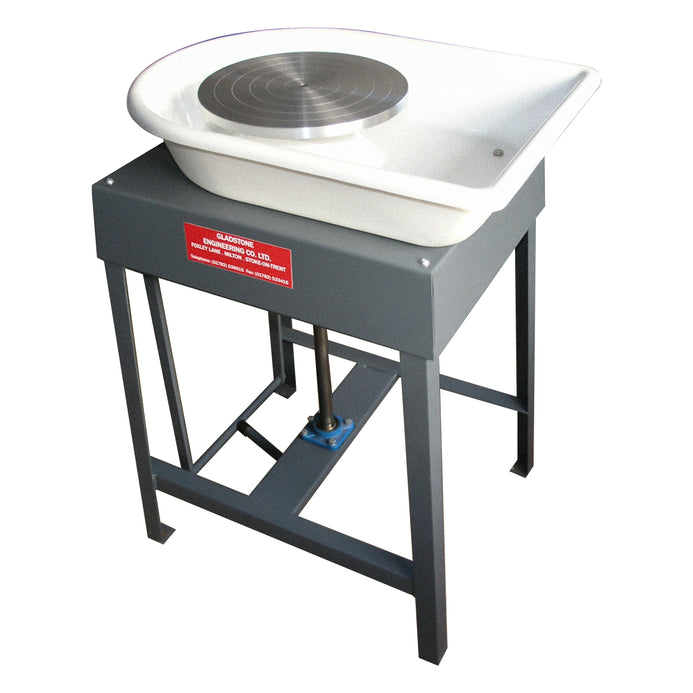
During the Iron Age, pottery wheel design improved again with the introduction of the kick wheel. This design featured a large, heavy flywheel positioned beneath the wheel head.
Potters could keep the wheel spinning by kicking the flywheel with their foot while shaping clay with both hands.
Kick wheels offered several advantages:
Many professional potters still use kick wheels today because they provide a natural rhythm and precise speed control during throwing.
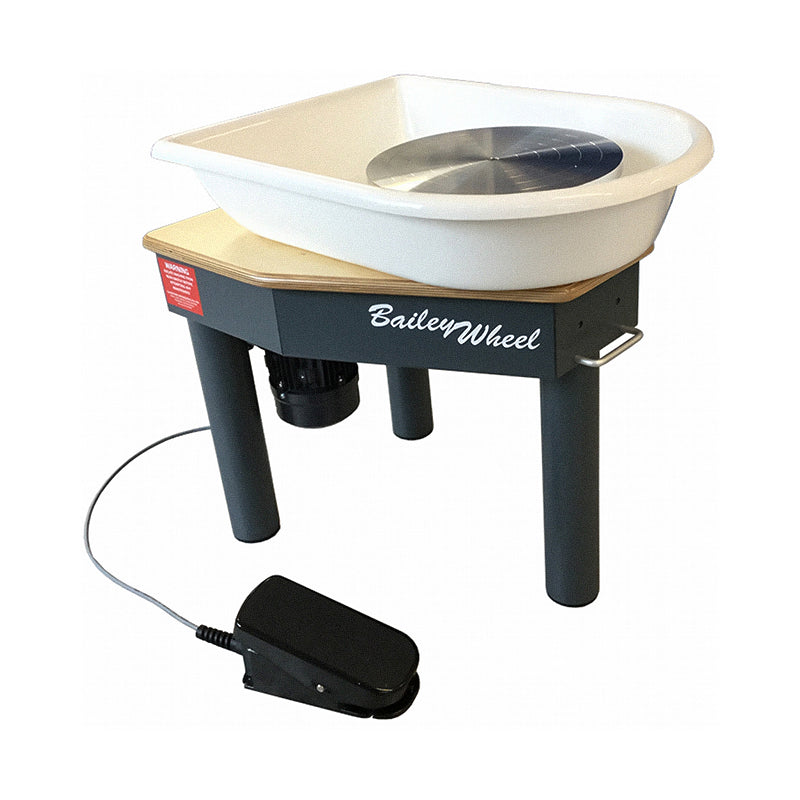
Modern electric pottery wheels became widely available in the 20th century. These wheels use electric motors to rotate the wheel head, allowing potters to control speed using a foot pedal.
Electric wheels are popular in schools, studios, and home workshops because they offer:
Many modern wheels also include features such as reversible rotation, digital speed control, and removable splash pans for easier cleaning.
| Impact | Why It Matters |
|---|---|
| Faster production | Potters could create many more vessels in less time |
| Improved symmetry | Wheel throwing allows perfectly balanced shapes |
| New pottery styles | More complex forms became possible |
| Trade and commerce | Standardised pottery supported growing trade networks |
| Development of ceramic art | Pottery evolved from simple utility to artistic expression |
Today’s pottery wheels are designed for a wide range of users, from beginners learning to throw their first bowl to professional studio potters producing large ceramic pieces.
Modern pottery wheels typically vary by:
If you're exploring pottery for the first time, choosing a well-built wheel designed for your skill level can make learning the craft far more enjoyable.
While the basic principle of the pottery wheel has remained unchanged for thousands of years, modern technology continues to improve how wheels are designed and used.
Recent developments include:
Some ceramic artists are even experimenting with combining traditional wheel throwing with emerging technologies such as ceramic 3D printing.
The pottery wheel is around 5,000–5,500 years old. Early versions appeared in the Near East around 3500 BC.
A slow wheel or tournette rotates slowly and was mainly used to help turn hand-built pottery. A fast wheel uses a flywheel mechanism that allows clay to be thrown directly while spinning.
Yes. Many potters still prefer kick wheels because they provide precise speed control and a traditional throwing experience.
Electric wheels are often easier for beginners because they maintain a steady speed and require less physical effort to operate.
Absolutely. Hand-building techniques such as coiling, slab building, and pinching are still widely used by ceramic artists.
The pottery wheel is one of the most enduring tools in human history. From simple hand-turned discs used thousands of years ago to modern electric wheels found in studios today, it has shaped the way we create ceramic vessels and artwork.
Whether you are a beginner discovering clay for the first time or an experienced potter refining your skills, working on a pottery wheel connects you to a craft that stretches back to the earliest civilisations.
If you are ready to begin your own pottery journey, exploring a quality pottery wheel is a great place to start.