

Always Here for Advice
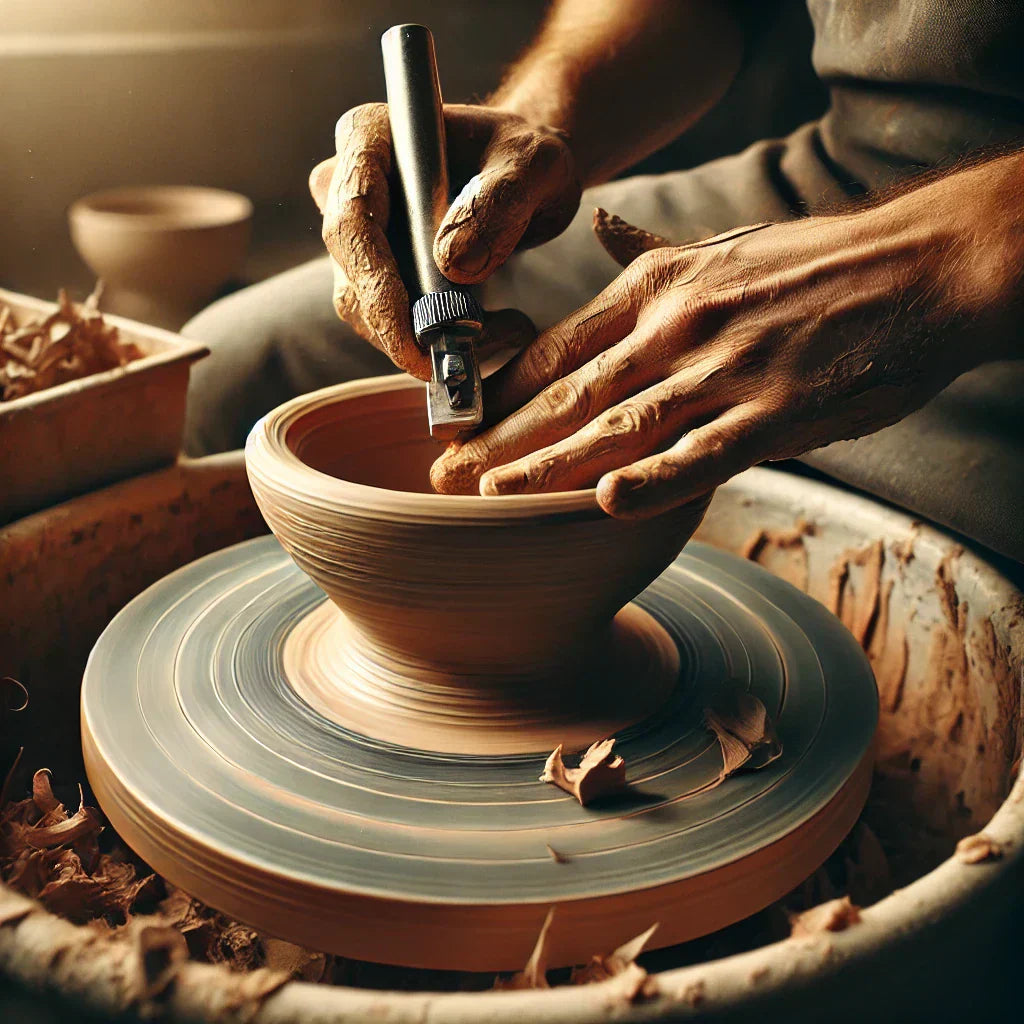
Ever turned a promising pot into a wobbly disaster? Beginner Pottery Wheels make learning the basics easier, but trimming is the secret to smooth, professional pottery! The short answer: centre your leather-hard piece, use sharp tools, and carve carefully. Learning this skill takes patience, but beginners who master it unlock sleeker shapes, balanced bases, and pottery perfection. Keep reading for expert tips!
Trimming pottery is where the magic happens. It’s the difference between a lumpy, rough shape and a refined, elegant piece.
But how do you do it right? Whether you're a beginner or levelling up your pottery game, this guide walks you through the process—step by step.

Trimming is the art of refining a wheel-thrown pot by shaving away excess clay once it’s reached a leather-hard stage.
It sharpens details, creates a foot ring, and ensures your pottery looks professional.
Trimming isn't just about looks—it improves function, too. Uneven walls can lead to cracking or instability. By carefully removing extra clay, you create balance, symmetry, and durability.
Trimming-friendly clays vary by firing range — our guide on pottery wheel and clay pairings explains which earthenware and stoneware bodies trim cleanest at leather-hard.
Ever noticed how some handmade pottery looks sleek and polished while others look, well, a bit lumpy? Trimming is the secret.
It defines crisp lines, removes imperfections, and gives each piece a clean, intentional design.
A well-trimmed pot dries evenly, preventing warping and cracks. The foot ring also improves stability—essential for mugs, bowls, and vases that need to sit flat without wobbling.
|
Tool |
Purpose |
|
Removes clay smoothly and efficiently. |
|
|
Rib Tool |
Helps refine shapes and smooth surfaces. |
|
Needle Tool |
Marks guidelines and fine details. |
|
Sponge |
Keeps clay slightly moist for smoother trimming. |
|
Calipers (Optional) |
Ensures even wall thickness, great for lidded pots. |
Pottery Wheel – A steady, well-maintained wheel is key for precision.
Water – Just a small amount prevents clay from drying too fast.
Press your fingertip into the clay. If it leaves a light mark without sticking, you're good to go.
Too soft? It’ll collapse under the tool. Too dry? It'll chip and crack.

Place your piece upside down and spin the wheel slowly. If it wobbles, adjust its position until centred.
Use small clay coils to anchor the piece, or work on a foam bat for extra grip. A secure hold makes trimming much easier.
Mark a rough guide with a needle tool, then begin carving out the foot ring with a loop tool.
Aim for a well-proportioned foot. Too deep, and it weakens the base; too shallow, and it won’t elevate the piece properly.
Hold the loop tool at a 45-degree angle and apply light, steady pressure.
Work in slow, controlled motions around the pot—rushing leads to gouges and uneven walls.
Once the foot ring is defined, gently trim the centre bottom for a seamless finish.
Run a fingertip across the base. If you feel bumps or ridges, refine it with light strokes.
Loop tools – For deep, broad cuts.
Rib tools – For subtle shaping.
Needle tools – For fine detail work.
A slightly damp sponge helps blend and soften any rough areas for a polished finish.
A final wipe with a damp sponge removes tiny rough spots and gives the piece a clean, professional look.
Brush away loose trimmings before they dry onto your pot.
Measure different areas to ensure even thickness—especially important for lidded pieces.
Cover loosely with plastic to prevent moisture loss from one side drying faster than the other.
Use light, controlled pressure.
Trim in small layers rather than taking off too much at once.
Dull tools can drag and tear clay, creating rough edges. Keep them sharp for cleaner cuts.
Here’s a quick look at how different trimming tools perform based on precision, ease of use, and finishing quality:
📊 Trimming Tool Effectiveness
|
Tool |
Precision 🎯 |
Ease of Use 👍 |
Finishing Quality ✨ |
|
Loop Tool |
★★★★★ |
★★★★☆ |
★★★★★ |
|
Rib Tool |
★★★☆☆ |
★★★★★ |
★★★★☆ |
|
Needle Tool |
★★★★★ |
★★★☆☆ |
★★★☆☆ |
Most pots are ready to trim once they reach the leather-hard stage, which usually takes around 12 to 24 hours depending on the clay body, the thickness of the walls, and the humidity in your studio. The clay should feel cool and firm and hold its shape, but still be soft enough to carve cleanly without crumbling.
A pot is ready to trim when it is leather-hard: press a fingernail into the base and it should leave a mark without the clay sticking to your finger. If the clay still feels wet and tacky it is too soft and will distort on the wheel; if it has gone bone-dry and pale it is too hard to trim safely and may chip.
Centre the bowl upside-down on the wheelhead (a chuck or pads of clay help hold it steady), then turn the wheel slowly and use a loop trimming tool to carve away the excess clay from the base. Define the outer and inner edges of the foot ring first, then refine the recess in the middle, checking the wall thickness as you go so you do not trim through the bottom.
The essentials are a loop or ribbon trimming tool to remove clay, a needle tool to check wall thickness, and a sponge to clean up. A chuck or extra bats can help hold awkward shapes in place while you work. You will find the full range in our pottery tools collection.
Mastering pottery trimming is a game-changer. It takes patience and practice, but once you’ve got the hang of it, you’ll see a dramatic improvement in your work.
Start with simple shapes, experiment with different tools, and refine your technique with each piece. Before long, you’ll be trimming like a pro—turning rough clay into smooth, gallery-worthy pottery!